Cash on delivery in Egypt: managing it
Cash on delivery is still the choice of many buyers in Egypt. It is not a problem in itself, but it needs follow-up that prepaid orders do not.
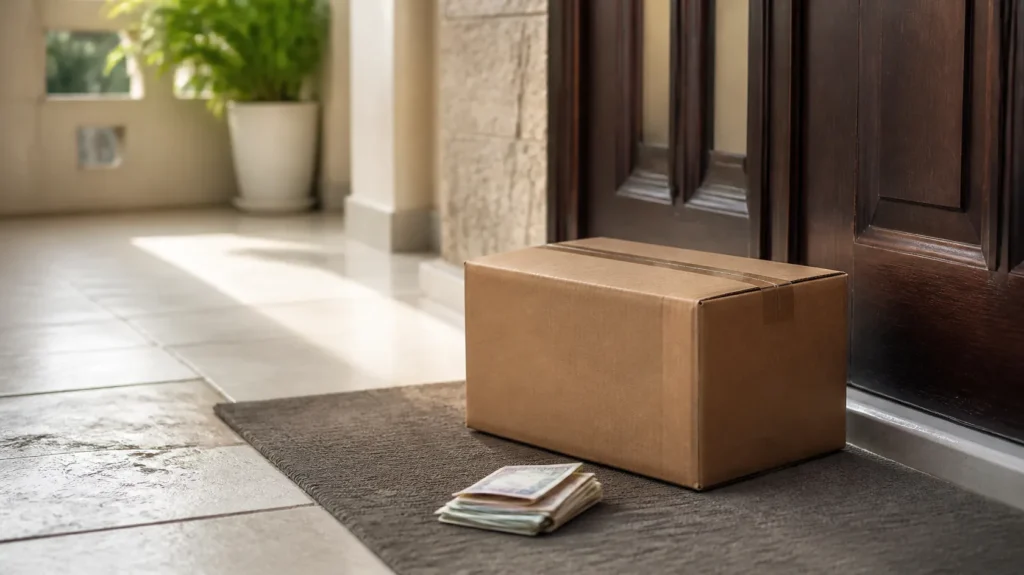
Anyone running an online store in Egypt knows cash on delivery is not a side option; it is central to how many customers buy. Even as e-wallets and cards spread, many people still prefer to see the product before they pay. Understanding that behaviour and managing it well makes a real difference to a store’s profits.
Why do buyers prefer it?
The first reason is trust. A buyer dealing with a store for the first time does not know whether the product will arrive as pictured. Cash on delivery moves the risk from them to the store, so they feel safe. Others have no electronic payment method, or are uneasy entering their details on a website. So removing the option may look like a fix for risk, but it usually costs the store serious customers.
The money arrives after the parcel, not with it
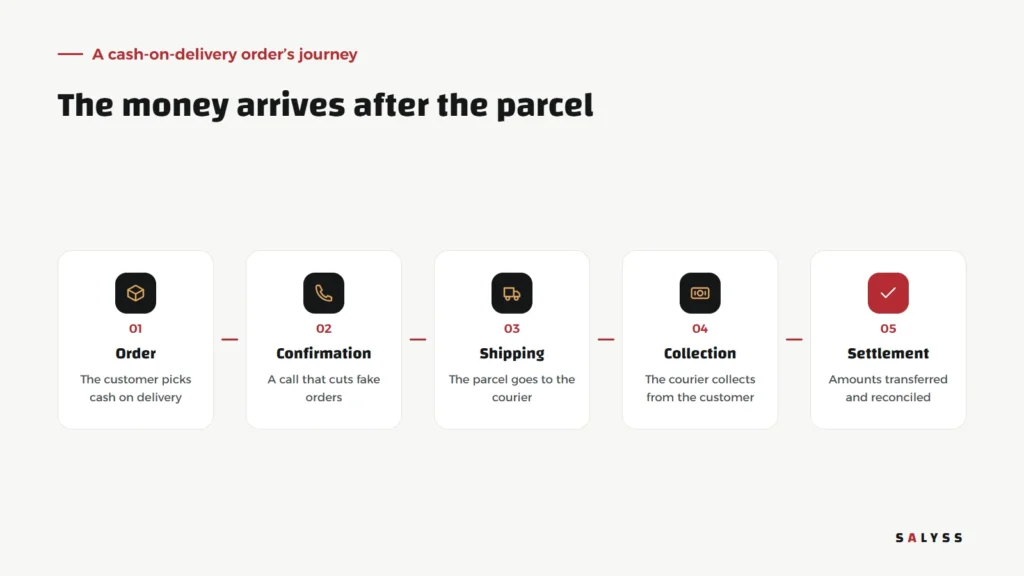
With prepaid orders, the money arrives before the parcel moves. With cash on delivery, the journey is longer: the customer orders, the order is confirmed, it ships, the courier collects the cash, and the courier company transfers and reconciles it. Delays or errors can happen at each step, and a store that does not follow them finds out late.
Four points to watch
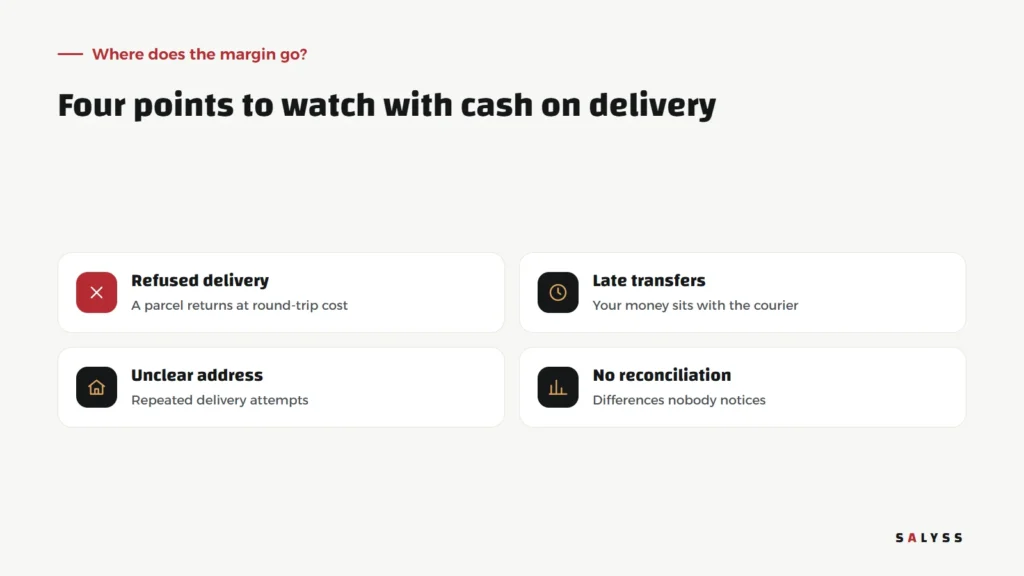
- Refused deliveries: a customer changes their mind at the door, and the parcel returns with shipping paid both ways and no sale.
- Late transfers: money already collected but still held by the courier; the longer it sits, the harder it is to chase.
- Unclear addresses: repeated delivery attempts delay the parcel and raise the chance of refusal.
- No reconciliation: small gaps between what was delivered and what was transferred, unnoticed because nobody checks.
How to cut the losses
Confirm before you ship
A short call or message before shipping exposes non-serious orders, fixes incomplete addresses, and reminds the customer what they ordered and what it costs. This simple step is one of the most effective ways to reduce refusals at the door.
Make shipment status part of the order
When the shipment’s status flows back to the order in your system, the team sees stalled parcels at once and contacts the customer before they return. In SALYSS Commerce (page in Arabic) shipments are created with Bosta and J&T Egypt from inside the system, using shipping prices by governorate, and their status returns to the order.
Reconcile regularly
Do not wait for month-end. Reconcile courier statements against delivered orders in your system on a regular schedule, and chase any gap as soon as it appears. A small amount left today becomes a large one after a few months.
Know your customers
A customer’s history tells you a lot: have they refused parcels before? Do their orders usually get delivered? That helps you ask for extra confirmation or a partial prepayment when needed, without treating every customer with the same suspicion.
Where is the market heading?
Electronic payments are spreading, and their share is expected to grow over time. But the shift is gradual, and the smart store offers both: convenient electronic payment for those who prefer it, and well-managed cash on delivery for those who need it. The competition will not be about who drops cash on delivery, but about who runs it with the fewest losses.
If cash on delivery is eating your team’s time and your store’s margins, book a free consultation to review your order journey from placement to settlement.
Frequently asked questions
Should we drop cash on delivery to cut risk?
Usually not. Dropping it can lose customers who prefer it. It is better to manage it well: confirm orders, track shipments and reconcile transfers.
Why confirm orders before shipping?
A short call exposes non-serious orders and unclear addresses before you pay for a shipment that may come back.
How do I make sure all collected amounts arrived?
By reconciling courier statements with delivered orders in your system regularly, not only at month-end.