Lessons from running a real estate developer
What we learned building the operating system of a real estate developer that runs on it daily: from the website to sales, collections and accounting, and what we would do differently.

When we started working with Mithaq Real Estate, the goal was never just a beautiful website. It was a complete way of operating a real estate developer: from the first site visit, to the first call, to the signed contract, to years of instalments and claims. Along the way we learned lessons about running a real estate developer, which we share here as they are, including what we would do differently.
Lesson one: start with the field team
The first temptation in any system project is to start with the management dashboard: numbers, charts, reports. But those numbers come from the team’s daily work, and if reps and customer care do not record their work in the system, the dashboard will be empty or misleading. So the most successful start was the tools the team uses every day: the rep’s agenda, the customer file, and the late-payers list.
Lesson two: the website is part of the system
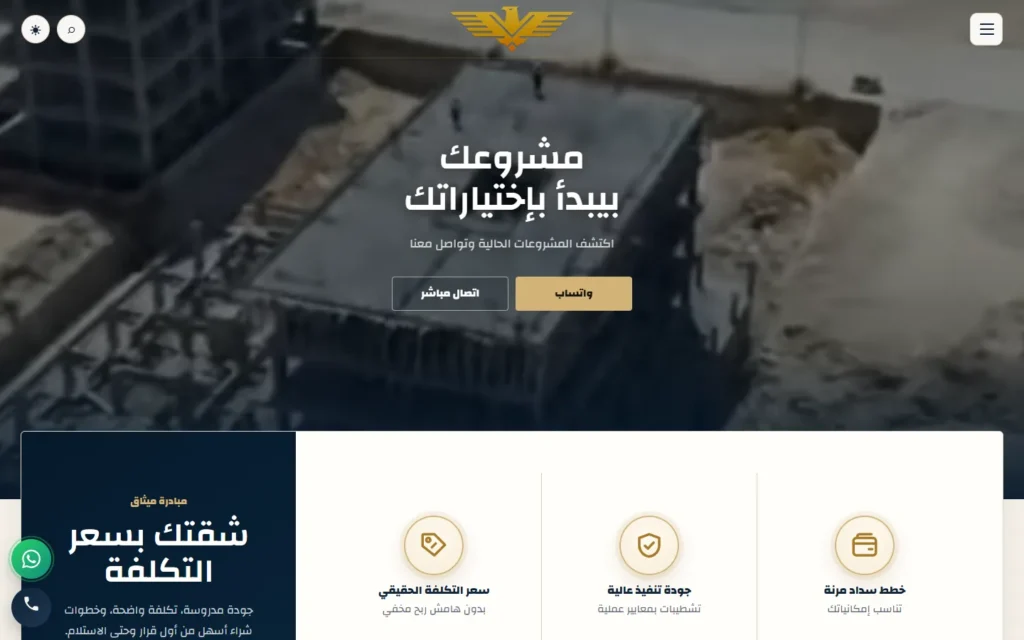
A real estate website is not a catalogue. Every form a visitor fills in is a lead that must reach a rep and be followed up. When the website and internal system are one, requests go straight to sales, and projects and units are shown from the same data the team works on, so what the customer sees never differs from what the rep knows.
Lesson three: one source of truth
In a real estate company, numbers pass through several departments: sales knows what was sold, customer care knows what was collected, accounting knows what was approved. If each department has its own figures, every meeting becomes an argument about which number is right. Linking the internal system to the Areeb accounting system meant a receipt is recorded once, approved, then reaches accounting, so each figure has a single source.
Lesson four: approve before posting
We could have posted every receipt to accounting automatically. But the accountant is responsible for the books and should see what goes into them. So we kept the approval step with accounting and streamlined everything else. The real speed came from removing re-entry, not from skipping review.
Lesson five: never hide the numbers when a link stalls
Any link between two systems can stall. At first, figures disappeared when a refresh failed, and the team stopped to ask questions. We learned it is better to keep the last correct figures visible with the date of the last update, so the team carries on and knows how current the number in front of them is.

Lesson six: a screen for every role
When every employee sees everything, their own work gets lost among everyone else’s. The app the team uses today, SALYSS Business Park, shows each role only its own screens: sales sees its customers, customer care sees collections, accounting sees what awaits approval, and management sees the whole picture.
Lesson seven: the system grows with the company
The system was not built in one go. It started with specific parts, and others were added whenever the team showed a real need: the agenda and reminders, then attendance, then pages for claims and statements. That gradual approach tied each addition to a problem the team knew, so it was actually used instead of becoming a screen nobody opens.
What would we do differently?
- Clean old data earlier: part of the early effort went into standardizing names and numbers from several spreadsheets. That should have started before anything else.
- Write down roles from day one: who approves what, and who sees what. Clarity here early saves many changes later.
- Shorter, more frequent training: short sessions on one part work better than one long session on everything.
These lessons are what SALYSS Realty (page in Arabic) is built on. If you run a real estate developer and want to start in the right place, book a free consultation.
Frequently asked questions
What should a real estate company build first?
In our experience, the most successful start was the team that deals with customers every day: sales and customer care, because their data underpins everything after.
Do these lessons apply to non-real-estate companies?
Mostly yes. One source of truth, role-based permissions and a gradual rollout apply to any company with a field team, customers and payments.
Does the system also run the company website?
Yes. Mithaq Real Estate’s website and internal system are both built on SALYSS Realty, so customer requests from the site go straight to the sales team.