Serviced apartments: lessons from operations
A serviced apartment is not just a property to rent; it is a service that starts before the guest arrives and continues after they leave. Lessons from building and running a booking site.
Running serviced apartments sits between real estate and hospitality. On one side, they are residential units with an owner and maintenance costs; on the other, they are a service guests judge the way they judge a hotel: quick replies, a clear price, easy check-in, a clean place. Many operators start from the first side and discover the second late, when reviews start appearing. Here is what we learned from building and running a direct booking site for serviced apartments, whose technical side we covered in a direct booking system for serviced apartments.
The guest journey starts before booking
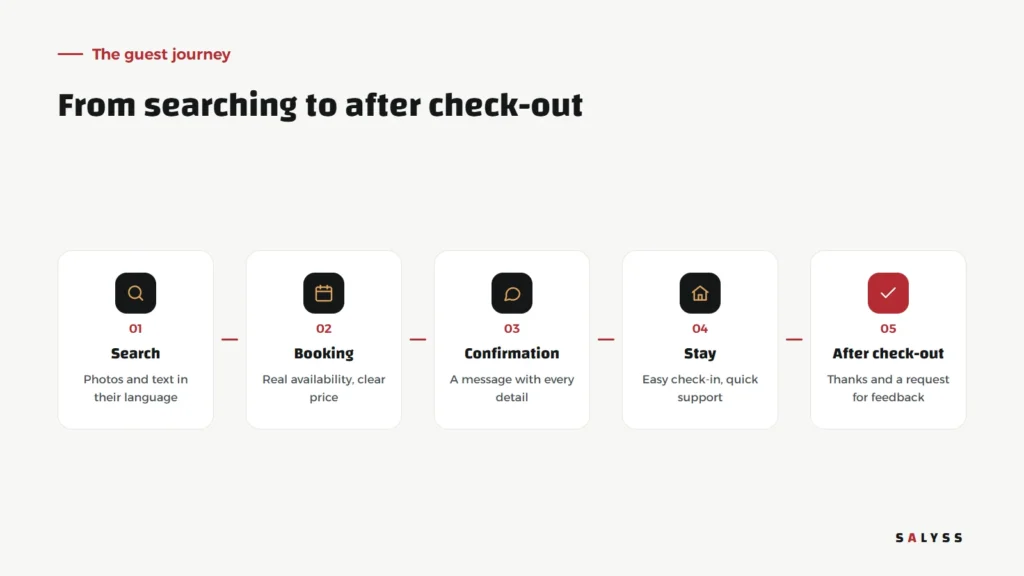
Guests do not see the apartment first; they see its photos and description. So service starts on the site itself: real, clear photos of each unit, an honest description of space, facilities and location, dates that are truly available, and a final price with no surprise extras at checkout. After booking, guests expect a confirmation with everything they need: the address, check-in time and who to contact. Then comes the stay itself, then after check-out: a simple thank-you and a request for feedback. Each stage needs a clear owner, or it gets lost within the team.
Lesson one: speak your guest’s language and currency
Serviced apartment guests often come from different cities and countries. When we built the HAPPYDAYS serviced apartments site, we made it available in six languages and six currencies, because guests trust a site more when they read the description in their own language and see the price in the currency they think in. That is not machine translation of pages but content written for each language, with care for the details each audience asks about, such as the distance from the airport or nearby landmarks.
Lesson two: direct booking and platforms together
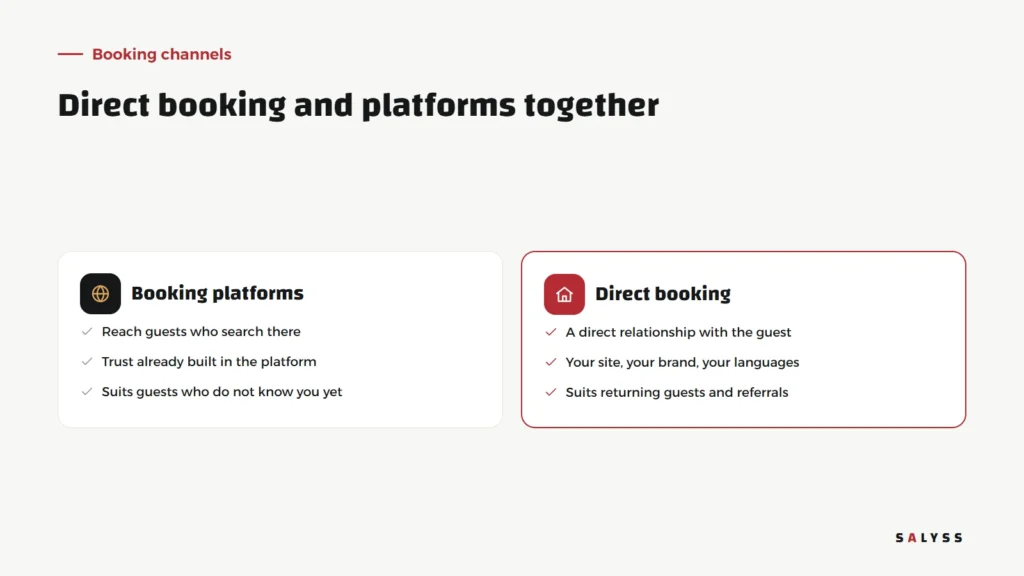
Big booking platforms bring guests who search there and do not know you yet, and they lend ready-made trust. A direct site builds a direct relationship with the guest and serves those who come back or heard your name from a friend. On the site we built, direct booking runs alongside a Booking partner link, so guests choose the way they are comfortable with. The point is not to leave the platforms, but not to depend on them alone.
Lesson three: real availability before anything else
The worst guest experience is booking and then hearing the unit is not available. Availability on the site must truly reflect each unit’s status, updated immediately after any booking, cancellation or maintenance. When you sell through more than one channel, keeping availability in one place becomes a necessity, not a luxury.
Lesson four: quick contact is part of the service
A guest who asks a question before booking and gets no quick answer books elsewhere. A guest who hits a problem during the stay judges the whole place by how fast it is solved. Decide who answers enquiries, during which hours, and which ready answers cover frequent questions: check-in time, parking, internet, cancellation. Log every contact in one place so the guest is never asked the same thing twice.
Lesson five: after check-out
A satisfied guest is the best source of the next booking, whether they come back or recommend you. A thank-you message after check-out, a request for honest feedback, and an easy way to book directly next time are simple steps that build a base of returning guests. Treat negative feedback as information, not an attack: what does it say about the service, and what can be fixed?
What does an operator need from the system?
- A page for each unit with photos, description and facilities.
- One availability calendar updated from every channel.
- Clear booking and payment with no surprises in the final price.
- Automatic confirmation and reminder messages for guests.
- A record for each guest that keeps their stays and conversations.
Owner and operator: clarity protects the relationship
Many serviced apartments are owned by individuals and run by another party. A recurring question follows: what happened in my unit this month? How many nights were booked? What maintenance was done? When bookings, expenses and maintenance are recorded per unit in one system, the operator can give the owner a clear picture effortlessly, and the conversation moves from suspicion to planning. The same clarity helps the operator internally: which units need better photos or descriptions, and which keep having faults?
Cleaning and maintenance between two bookings
The time between one guest leaving and the next arriving is the most sensitive moment in operations. The cleaning team needs to know departure and arrival times early, and maintenance needs to know about any fault a guest reported before the next guest arrives. Linking these tasks to the bookings themselves prevents the worst surprise: a guest arriving at a unit that is not ready.
Where to start
Open your site on your phone as if you were a guest from another country: do you understand the description? Can you see the price clearly? Can you book in minutes? Your answers are the improvement plan. Read about a landing page that turns visitors into customers, explore SALYSS Platform (page in Arabic), or book a free consultation.
Frequently asked questions
Should I leave booking platforms and rely on my own site?
We do not recommend it. Platforms bring guests who do not know you yet, while a direct site serves returning guests and referrals. It works best when both run together.
Why several languages and currencies on a booking site?
Because serviced apartment guests often come from different countries, and they trust a site more when they read in their language and see prices in their currency.
What must be organized before launch?
Real availability for each unit, how bookings are confirmed, and who contacts the guest at each stage of the stay.