Onboarding a new sales hire: the first month
A new sales hire either becomes productive quickly, or wastes weeks guessing and then leaves. A clear plan for the first month makes the difference.

In many companies a new sales hire starts day one with a desk, a phone, a list of numbers and the words “start calling”. Weeks later, they either find their way alone after mistakes that cost the company customers, or they feel lost and leave. Either way, the company has lost time and opportunities. Onboarding a sales hire in the first month is not a luxury for big companies; it is the shortest path to a productive employee. What follows is a simple plan we learned from working with sales teams, especially in real estate companies.
Why do new hires struggle?
- They do not know the product deeply: they memorize prices but not why customers buy.
- They do not know the system: they note things on paper or not at all, and follow-ups get lost.
- They do not know their limits: they promise a discount they cannot approve, or escalate every question.
- They do not know who to ask: they are shy to ask, so they guess.
Each of these can be solved with a clear plan before the first customer call.
The first-month plan
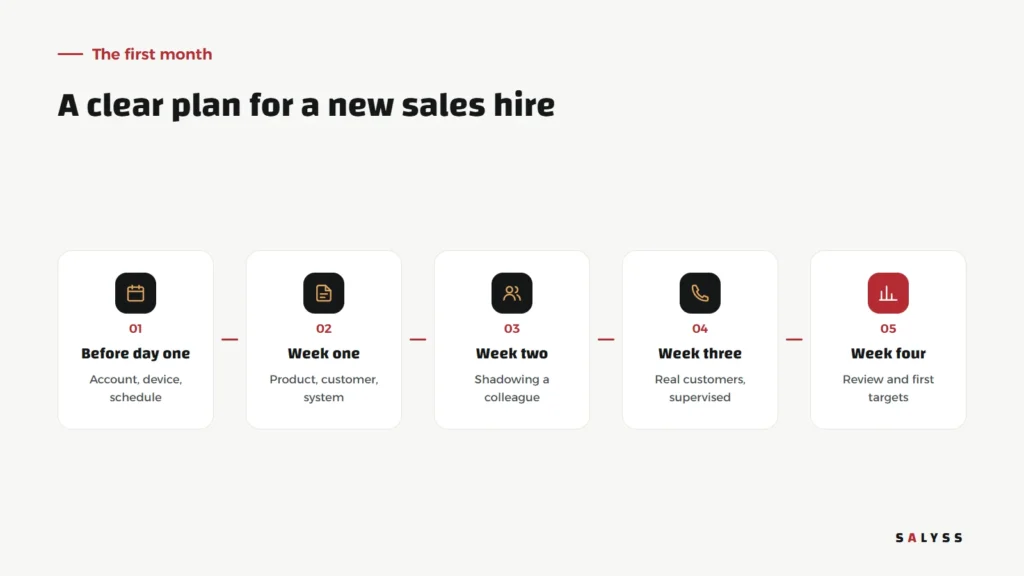
Before day one
Prepare their system account and permissions, their device, their first-week schedule and the name of the colleague who will accompany them. A hire who finds everything ready feels expected from day one.
Week one: product, customer, system
They learn the projects or products, visit the site if possible, and understand who the typical customer is and why they buy. They learn the system hands-on: how to register a lead, add a contact and a next step, and see what is due today.
Week two: shadowing a colleague
They sit next to an experienced colleague, listen to calls, join visits and watch how objections are handled. At the end of each day they discuss it: what did they notice, and what would they have done?
Week three: real customers, supervised
They start contacting real customers, usually new leads, with close review from the colleague or manager. Mistakes are expected here; what matters is discussing them straight away.
Week four: review and first targets
A session with the manager: what are they good at, and what needs work? Then realistic first targets for the next month, based on what the manager has seen of their work, not on the whole team’s targets.
What they must know before the first call
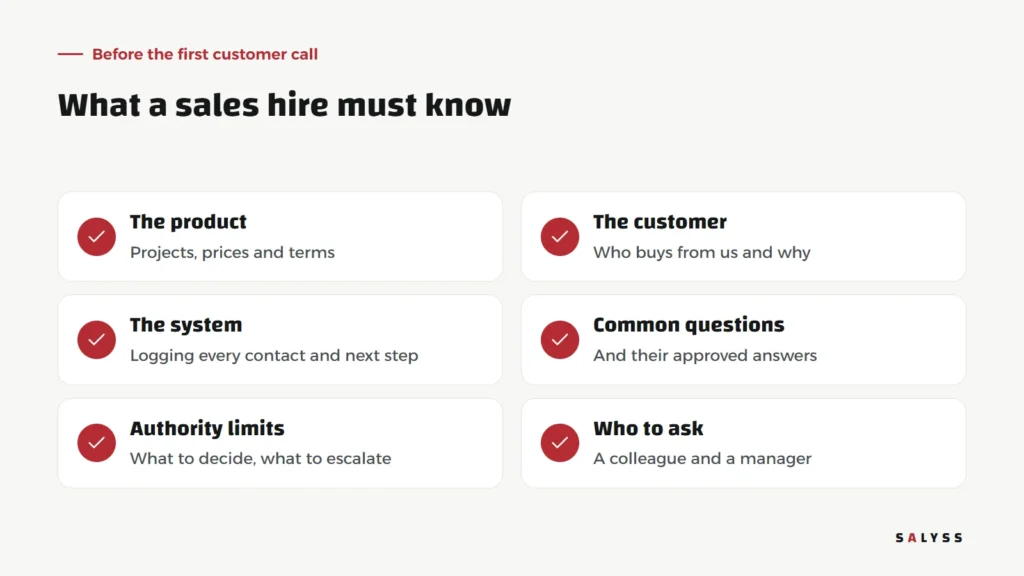
Two of these are often overlooked: authority limits and common questions. Write a list of the questions customers usually ask, with management-approved answers, and hand it over on day one. And make clear exactly what they can decide alone and what they must escalate: a particular discount, an exceptional date, a special contract term.
The system’s role in onboarding
The system is not just a tool the new hire learns; it is a training tool in itself. When they see each customer’s history and past contacts, they learn from colleagues’ work. When the manager sees the new hire’s follow-ups day by day, they can guide early before mistakes turn into habits. We explained in a sales and collections team app how each employee sees their daily tasks, and in lead follow-up why no customer should be left without a next step.
What we have learned
We have learned that new hires learn faster on their own device while working than in a training room, that a named colleague to ask saves weeks, and that a short weekly review beats a big evaluation at the end of probation. And we have learned that the first impression of the company forms in the first week, and lasts.
Common mistakes in onboarding sales staff
- Throwing the new hire at the hardest customers: giving them the list of leads that ignored everyone else, so they fail and lose confidence from the start.
- Lecture-only training: hours of theory with no hands-on practice in the system or with real customers.
- No follow-up after week one: leaving them alone as soon as they start calling, so small mistakes become their way of working.
- Team targets from day one: asking a new hire for veterans’ numbers pushes them toward easy promises rather than proper selling.
The return for the company
A structured month can look like a cost: the manager’s time, the colleague’s time, and weeks before the hire starts selling. But the alternative costs more. A hire who learns alone learns at the expense of real customers, and every customer lost to wrong information or a forgotten follow-up is a loss no report shows. A hire who leaves after a few weeks because they felt lost sends hiring back to square one. A structured first month is an investment that reduces both.
Where to start
Today, write a list of customers’ common questions and their answers, and name a colleague to accompany your next hire. Those two steps alone change their experience. Explore SALYSS Realty (page in Arabic), or book a free consultation to see how your system can support a sales team from day one.
Frequently asked questions
When should a new sales hire start contacting customers?
After learning the product and the system and shadowing a colleague, usually in the third week, with close supervision on the first calls.
Who is responsible for training the new hire?
The sales manager owns the plan, and an experienced colleague accompanies them daily. Having a named person to ask saves a lot of time.
How do I know onboarding worked?
When the hire logs every contact in the system with a clear next step, answers common questions confidently, and knows when to escalate to their manager.