Marketing a real estate project before launch
A successful property launch is built weeks before launch day. How do you build a list of genuinely interested buyers, prepare your team, and turn interest into reservations?

In real estate, launch day is not the start of marketing but its result. Developers who sell a large share of a project in its first days did not do it with one huge ad, but with weeks of preparation: clear materials, a trained team, and an interest list followed up regularly. Those who start marketing on launch day face a wave of enquiries they cannot handle, then a long silence. Pre-launch marketing is what separates the two.
The phases of project marketing
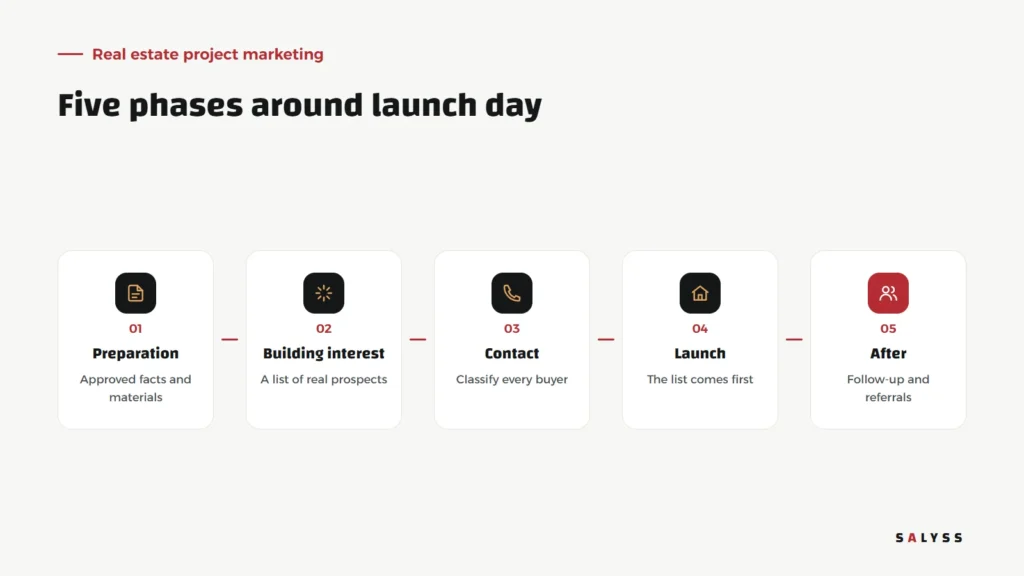
Preparation
Before any ad, the essentials must be ready and approved: location, unit types and sizes, plans, specifications and payment plans. Announcing details that change later damages trust and creates legal and commercial problems with buyers. Prepare a project page and a brochure that answer the most frequent questions.
Building interest
This is where the conversation about the project begins: why this location, who it suits, what makes it different. The goal here is not selling, but building a list of genuinely interested people who left their details and asked to be told at launch.
Talking to the list
An interest list is worthless if nobody contacts it. An introductory call, answers to questions, and a classification of each buyer by seriousness and need: unit type, rough budget and timing. That classification is what makes launch day orderly.
Launch
It starts with the list before the general public. People who waited deserve to know first, and they are closest to reserving. The team must be ready with consistent answers, and available units must be updated in real time so a reserved unit is never offered to two buyers.
After launch
After the first days the long work begins: following up with those who have not decided, sharing construction progress, and keeping a relationship with buyers until they become a source of referrals.
From interest to reservation
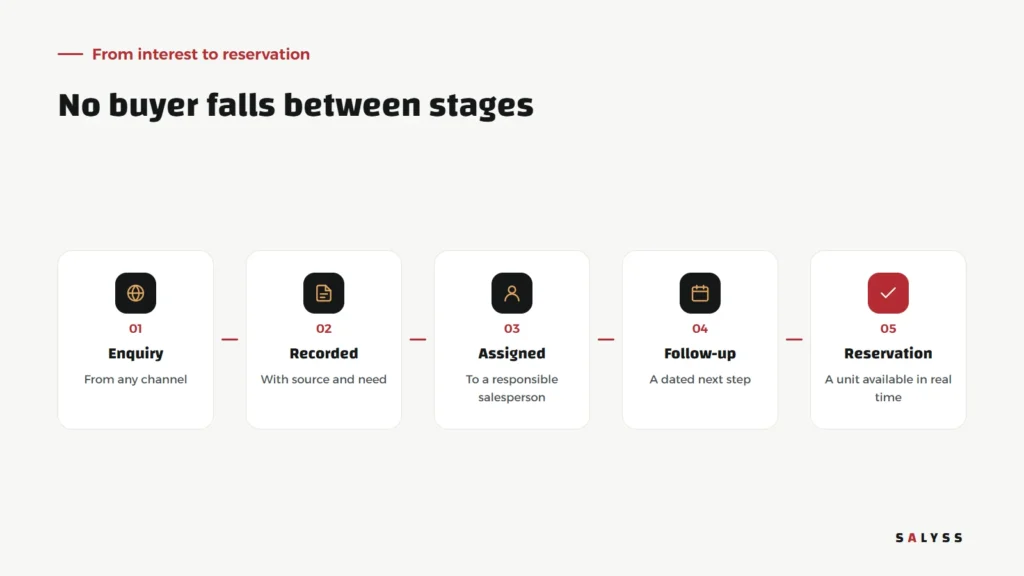
In many projects money is not lost in advertising but after it. Enquiries arrive from ads, the website and the phone, then scatter across salespeople’s phones and notebooks: replies are slow, some buyers are contacted twice, and others are forgotten. The answer is not more ads but a clear path. Every lead is recorded with its source, assigned to a salesperson, given a dated next step, and visible to management.
When this data lives in one system, management can see every day how many enquiries arrived, how many are still unanswered, which salesperson needs support, and which channel brings serious buyers. That view is what bases spending decisions for the next campaign on what actually happened.
What we have learned working with developers
- The first reply: a buyer asking about one project is usually asking about others too, and whoever replies first and clearly gets their attention.
- Consistent answers: when every salesperson answers differently about price or payment plan, buyers lose trust.
- Every lead’s source: without it you cannot tell which channel brought actual reservations, so you keep spending on what does not work.
- Live unit availability: offering a reserved unit to a new buyer hurts the company more than losing the sale.
- Follow-up after reservation: the property buyer’s journey is long, and instalment follow-up and handover shape the reputation of your next project.
Read more in our article on lessons from running a real estate developer.
Channels worth attention
No single channel suits every project. The project page on your website is the foundation, because it is where you control the information, and every campaign should lead to it or to a clear form. Social media ads build interest quickly, useful content about the area and unit types attracts serious searchers, and existing customers and broker networks are an important source of referrals. What matters is measuring each channel by the reservations it brought, not by enquiries alone.
Prepare the sales team before the public
The best campaign loses its value if a buyer reaches a salesperson who does not know the project. Before launch, gather the team and present the project as you will present it to buyers: the location and its strengths, unit types, specifications, payment plans and the approved expected handover date. Prepare together a list of likely questions with agreed answers, especially the hard ones about prices and comparisons with other projects. Agree how leads will be distributed among salespeople, and how quickly each enquiry should be answered. A prepared team turns the launch wave into reservations; an unprepared one turns it into frustrated buyers who tell others about their experience.
Where to start
Before spending on the first ad, ask your team: if a hundred enquiries arrived tomorrow, who would answer them? Where would they be recorded? How would we know who was followed up and who was not? If the answer is unclear, start there. Explore SALYSS Realty (page in Arabic), which brings leads, follow-up, units and instalments into one system, read our landing page guide, or book a free consultation.
Frequently asked questions
When should I start marketing a real estate project?
Early enough before launch to prepare materials and build an interest list, provided the information you announce is accurate and approved.
What materials are essential before launch?
A project page, a brochure, unit plans, photos or architectural renderings, and consistent answers to questions about prices and payment plans.
Why does customer interest fade after a campaign?
Usually because of slow replies or no organized follow-up. A buyer interested today may reserve elsewhere tomorrow if nobody follows up.