Tracking construction progress claims
Between the site, the technical office and accounting, claims get lost in paper and messages. What did we learn building claims tracking into a real estate developer’s system?
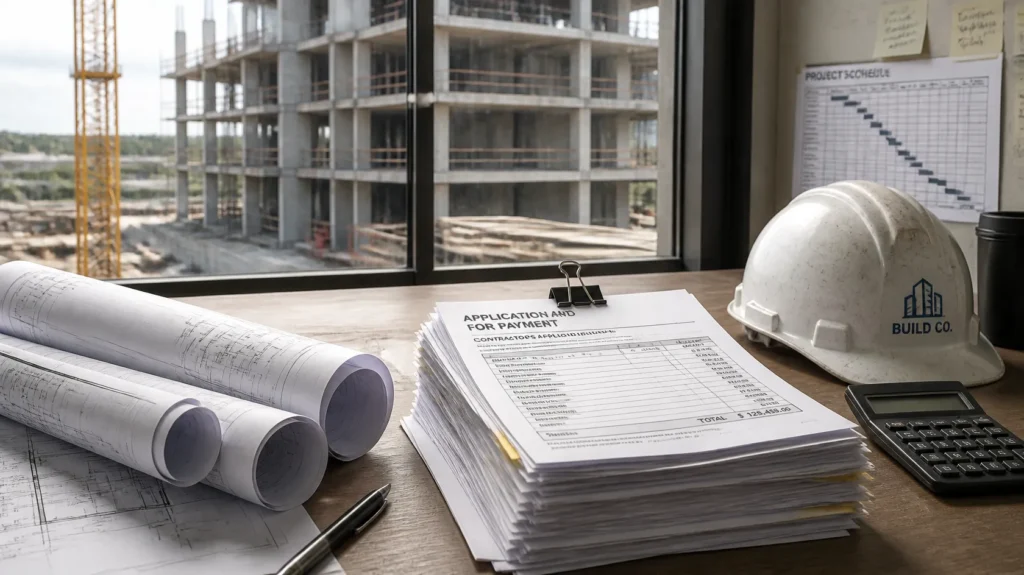
In any construction project, the progress claim is where work on site meets money in accounting. In many companies that meeting point travels a long road: a contractor hands in paper, an engineer reviews it in the site office, a message goes to the technical office, and a file reaches accounting days later. Along the way claims get lost, others are delayed, and nobody knows exactly what has been paid on each project. Tracking claims in one system shortens that road.
That is what we built inside SALYSS Business Park at Mithaq Real Estate, and here is what we learned.
The claim cycle from site to accounting
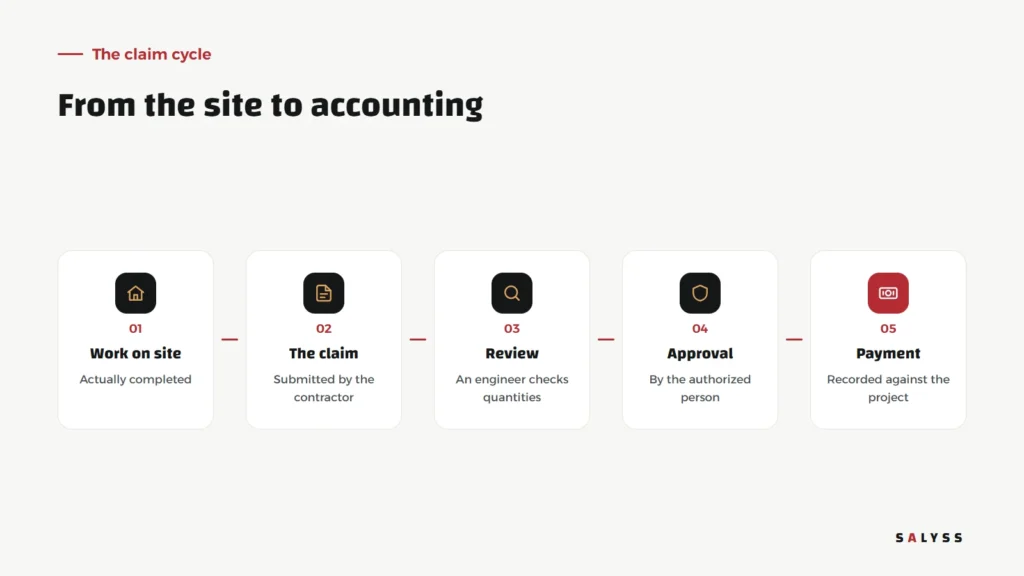
The cycle starts with work actually completed on site. The contractor submits a claim for it; an engineer reviews it and checks quantities against what was done. The authorized person approves it, and the payment is recorded against the project. Every stage is logged with who did it and when, so “who has this claim?” never goes unanswered.
Lesson one: separate entry from approval
One of our most important rules is that whoever enters a cost item cannot approve it. The engineer records the item, and someone else reviews and approves it. It may look like an extra step, but it protects figures from mistakes before it protects them from abuse, and gives management confidence that every number passed two pairs of eyes.
Lesson two: record items in detail from the start
Adding an item follows clear steps: the project, then the item type (works or materials), then the item itself from an approved list or a new one, then quantity and price, then where in the building the work happened, such as the basement, the floors or the roof, with a note and a date. That detail feels like a lot at entry, but it is what makes later review fast, and lets client statements be built from approved items rather than estimates.
What should a project manager see?
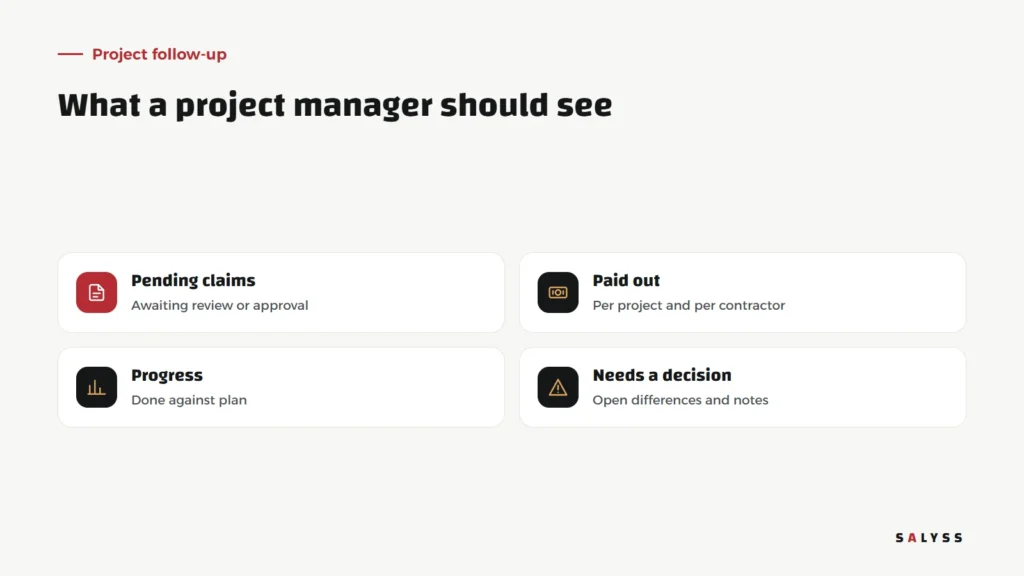
The claims board in the system is organized around what needs attention: alerts for statements overdue or coming due, items waiting for review or approval, statements approved but not yet sent, and those already sent. Alongside that, the manager sees what has been paid on each project and to each contractor, plus open differences and notes that need a decision.
Lesson three: each role sees its own view
The head of engineering needs project finance from the construction angle: instalments collected from clients against the value of statements, without seeing the company’s whole treasury. A site engineer needs to record work and upload drawings from the site itself. Defining what each role sees was not a restriction; it made every screen answer only its owner’s questions.
Lesson four: the technical office is part of the cycle
Approved drawings and engineering files are not a separate archive but the reference for review. When each project’s files are organized in one place, with gaps clearly shown, engineers review quantities on a clear basis and disputes with contractors shrink.
What would we have done earlier?
- Contractor and item lists first: the system needs a contractor directory and an approved item list before the first claim, or entry gets delayed.
- Statement dates: setting an expected date for each statement from the start makes alerts useful from day one.
- On-site training: site engineers learn faster on their own device on site than in a training room.
Where to start
Start with a question: how many claims are pending right now, and with whom? If the answer takes calls and messages, that is your starting point. Explore SALYSS Realty (page in Arabic), read more lessons from running a real estate developer, or book a free consultation.
Frequently asked questions
Why should the person who entered an item not approve it?
Separating entry from approval protects figures from errors and abuse, and gives every item a second person’s review before it reaches accounting.
What is the difference between a client statement and a contractor claim?
A contractor claim is what a contractor charges for work done; a client statement is what the company charges its client for approved work not yet billed.
Where does this tracking run today?
Inside SALYSS Business Park at Mithaq Real Estate, in the execution section with its tabs: work follow-up, work statement and claims.