A simple feasibility study before you invest
Not every project needs a hundred-page study, but every project needs honest answers to four questions before you put money into it. How do you prepare a simple, practical feasibility study?

Many projects start with enthusiasm: an idea that looks like a winner, a friend who succeeded with something similar, an opportunity the owner fears missing. After launch come questions that could have been asked before: is there really enough demand? How much money will we need before the project covers itself? What if sales are slow? A simple feasibility study does not guarantee success, but it exposes weak points while changing them is still cheap.
Four questions before any investment
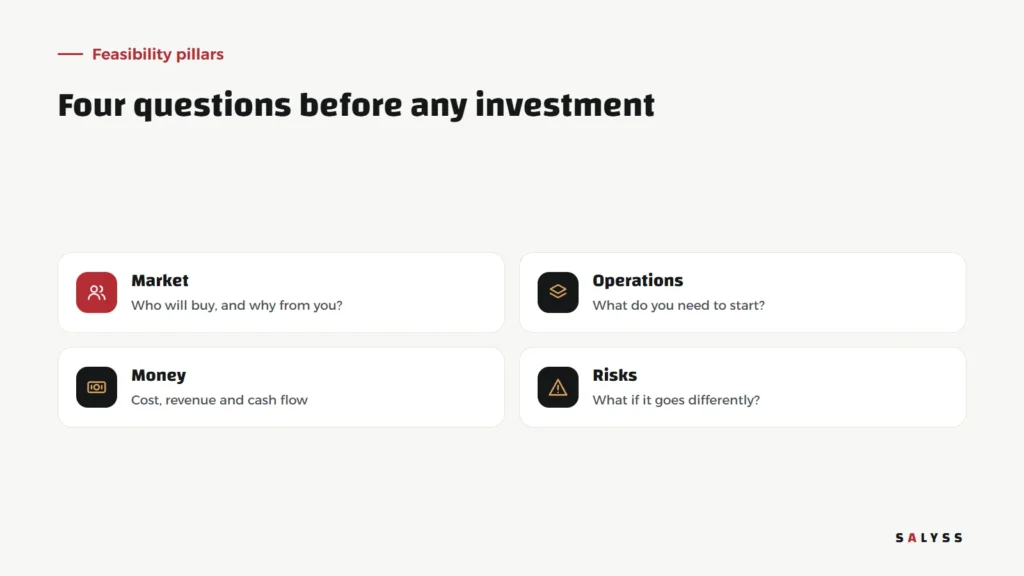
Market: who will buy, and why from you?
Start with the customer, not the product. Who exactly is the target customer? Where do they buy today? Why would they switch to you? Talk to real potential customers before writing any figure, and watch competitors: their prices and what their customers complain about. Demand you assume without checking is the most dangerous assumption in the whole study.
Operations: what do you need to start?
Premises, equipment, team, licences, suppliers and systems. Separate what you need on day one from what can wait until the project proves itself.
Money: cost, revenue and cash flow
One-off investment, monthly operating costs, expected revenue and when it actually starts. More important than expected profit is cash flow: how many months will the project need funding before it covers its expenses? We explained the difference between profit and cash in cash flow management for growing companies.
Risks: what if it goes differently?
List what could go wrong: a delayed licence, rising material costs, a competitor cutting prices, a large customer paying late. For each risk, what will you do if it happens?
Never rely on one number
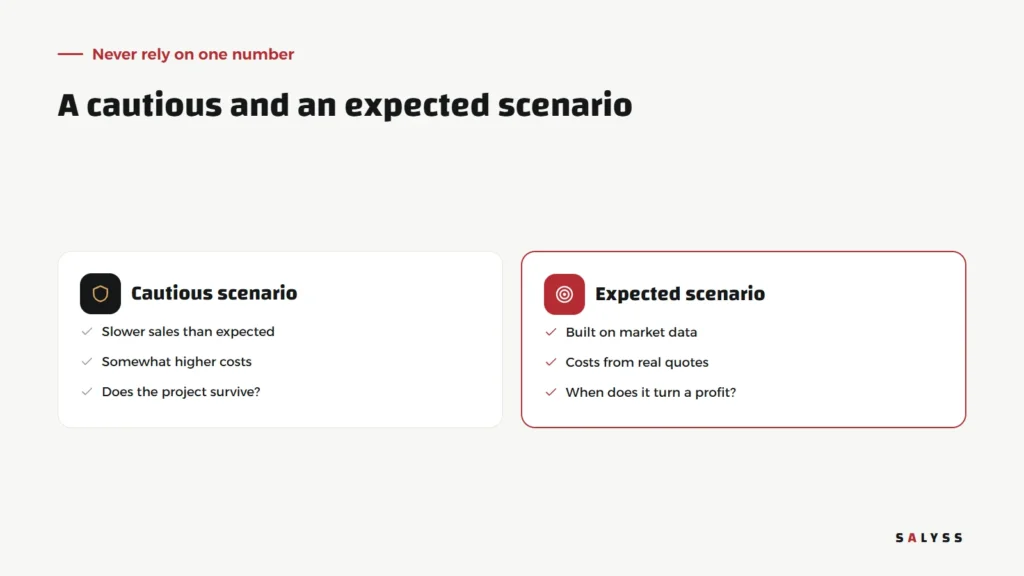
The weakest feasibility studies offer a single optimistic sales figure. Better to calculate at least two scenarios: an expected one built on your best market data and real quotes, and a cautious one where sales are slower and costs somewhat higher. If the project only survives the cautious scenario with funding you do not have, you need to know that before you start.
In real estate projects
In property development, a feasibility study usually starts from the plot: what can be built on it, at what cost, and at what price units can sell in that area. For one of our real estate clients we built an initial land-study estimator on their website: a visitor enters details of their plot and receives a first estimate after leaving contact details, with reference prices updated by management. A tool like this does not replace a detailed study, but it gives a quick first picture and turns a question into a conversation with a serious prospect.
Where do the numbers come from?
A feasibility study is only as good as the sources of its figures. Costs should come from real quotes from suppliers and contractors, not general estimates. Selling prices come from a genuine comparison with what is offered in the same market and area. Sales pace comes from comparable cases you can verify, or a small trial of your own. Note the source beside each figure, so anyone reading the study, including you months later, knows which numbers are confirmed and which are assumptions to revisit. When a source changes, such as the price of a key material, you know at once which part of the study to recalculate.
Questions that expose a weak idea
- Have you spoken to real potential customers, or only enthusiastic friends?
- What stops an existing competitor from copying your idea tomorrow?
- Can you sustain a full year without profit?
- Who will run the project day to day, and do they have the experience?
- What is the smallest version of the idea you can test before investing fully?
Put these questions to someone who does not share your enthusiasm; they are better placed to see what you cannot.
Start small when you can
Sometimes the best feasibility study is a small trial: one product instead of a full line, a pilot branch, or a limited campaign to measure demand. A small trial turns assumptions into real data and bases the decision to expand on what actually happened. When you start, record everything from day one in one system so you can compare reality with the study month by month, as discussed in digital transformation for small and mid-sized companies.
Where to start
Write your answers to the four questions on one page: market, operations, money and risks. Then calculate a cautious scenario beside the expected one. Any question you cannot answer is the first thing to research. If your project is in real estate, explore SALYSS Realty (page in Arabic), or book a free consultation to talk about the systems your project will need from the start.
Frequently asked questions
Can I prepare a feasibility study without a consultant?
For small projects you can start with a simple study yourself, as long as the figures are honest. As the investment grows, a sector specialist’s view helps review the assumptions.
What is the most important part of a feasibility study?
The assumptions behind the figures, especially expected sales volume and pace. An optimistic sales figure without a basis makes everything after it wrong.
What if the study shows the project is not viable?
That is a successful study, because it saved you a loss. You can adjust the idea, its size or its timing, then recalculate.