Collecting real estate instalments
Collection is not chasing customers; it is organized follow-up that starts before the due date. How do you build a collection process that protects both your money and your relationship with the buyer?

In real estate development, signing the contract is not the end of the sale; it is the start of a relationship that runs for years of instalments. Over those years a buyer goes through all sorts of situations: travel, temporary financial pressure, or simply forgetting. Collecting real estate instalments well means getting paid on time while keeping a customer happy enough to recommend you.
Collection starts before the due date
The most common mistake is to start following up after the delay. By then the customer is defensive and the call becomes a demand. A reminder a few days before the date is a service: it helps the customer plan and shows the company is organized. The difference between the two approaches shows in both payment rates and the tone of the relationship.
Four statuses to review every week
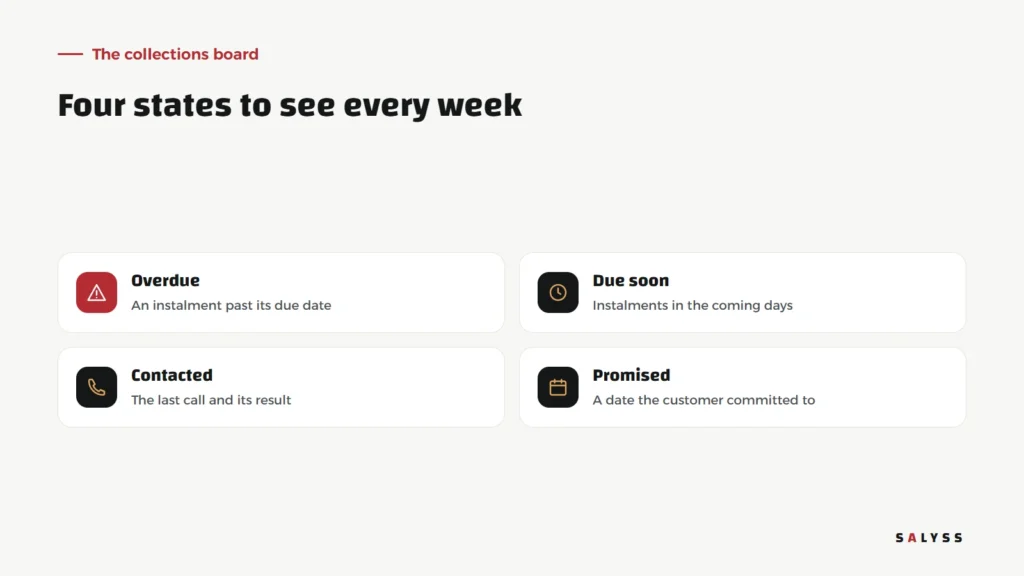
- Overdue: an instalment past its date and unpaid. It needs a call today, not next week.
- Due soon: instalments in the coming days. This is where reminders go.
- Contacted: when the last call was and how it went, so two people do not call the same customer, or nobody does.
- Payment promise: a date the customer set themselves, which must be followed up on that day.
Organized follow-up instead of chasing
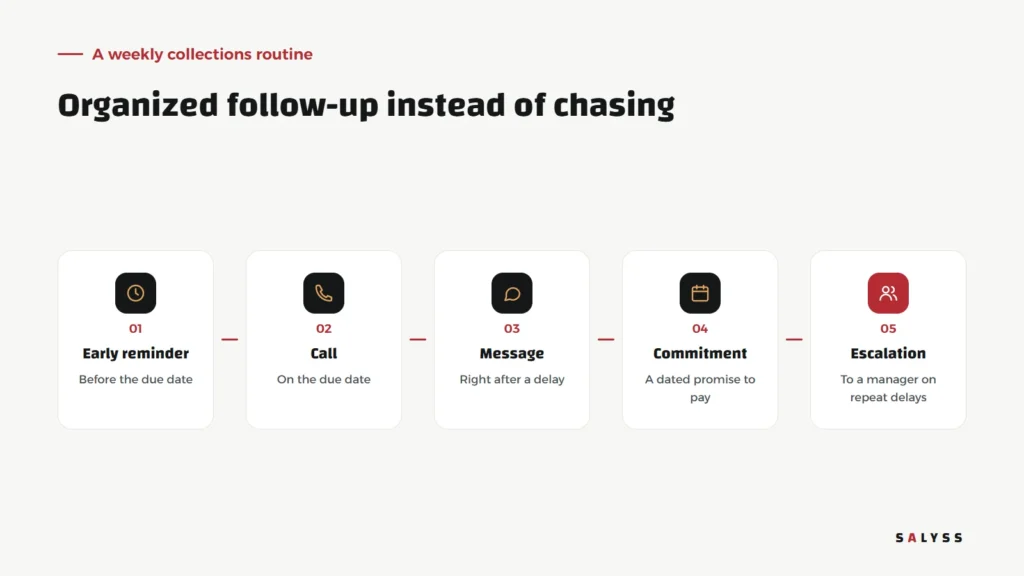
When the team knows the steps in advance, follow-up does not depend on someone’s mood or a busy day. An early reminder before the due date, a call on the day, then a message right after a delay. If the customer names a payment date, it is recorded as a dated promise; if delays repeat, the file moves to a manager.
Tone is part of the system
A buyer who pays late is not an opponent. Many delays have temporary causes, and a customer treated with respect in a hard moment remembers it. We recommend short, clear messages that state the amount, the date and how to pay, with no threats in the early steps. Firmness belongs in escalation, when delays become a pattern.
One record for every buyer
The biggest problem with manual collection is that information is scattered: the rep knows what the customer promised, customer care knows the last call, and accounting knows what actually arrived. When all of it sits in one file, anyone calling the customer knows what happened before. In SALYSS Business Park, customer care sees late payers, upcoming instalments and the contact log, and receipts are recorded on collection so they reach accounting for approval.
What goes into a good reminder?
A good message is short and leaves the customer with no questions. It opens with their name, then gives the unit or contract number, the instalment amount, the due date, the available payment methods, and a number to call with questions. No long introduction, no stiff formal language. Above all, it arrives at the same point every time, so the customer gets used to it and expects it.
When the customer replies that they will pay on a given day, that day is recorded as a payment promise in their file, and the team follows up on the day without having to remember.
What should management measure?
- How many instalments were late this month compared with last month?
- How many payment promises were kept on time?
- How many files moved to escalation, and why?
- Are there late customers nobody has contacted?
These questions do not need complex reports, just data recorded in one place.
Collection is part of SALYSS Realty for real estate companies (page in Arabic). To review how collection works in your company, book a free consultation, or read more about running a real estate company in the SALYSS Business Guide.
Frequently asked questions
When should instalment follow-up start?
A few days before the due date, with a calm reminder. Early follow-up reduces delays more than chasing after the date has passed.
What is the difference between a one-off and a repeated delay?
A one-off delay is usually settled with a call and a dated payment promise. Repeated delays need escalation to a manager and a clear plan with the customer.
Does collection need a dedicated system?
It needs one place where the team sees every instalment, each customer’s status and the last contact. That is what SALYSS Business Park gives customer care teams.