Sales KPIs worth tracking
The month-end sales figure tells you what happened, not why or what to do. Which indicators deserve a sales manager’s attention every morning?
Many sales managers meet their team at month-end to review a single number: how much did we sell? The problem is that this number arrives late. By the time you discover the month was weak, the month is over. Good sales KPIs work differently: they tell you every day what is happening now, so you can step in before it shows in the result.
Lagging and leading indicators
Sales revenue is a lagging indicator: it describes what happened after it happened. Leading indicators describe the activity that produces sales: how many customers did we contact? How many appointments did we book? How many offers did we send? If those numbers drop today, sales will drop weeks later. A manager who watches them can act early: redistribute leads, help a struggling rep, or question the quality of leads coming from ads.
Four numbers worth a look every morning
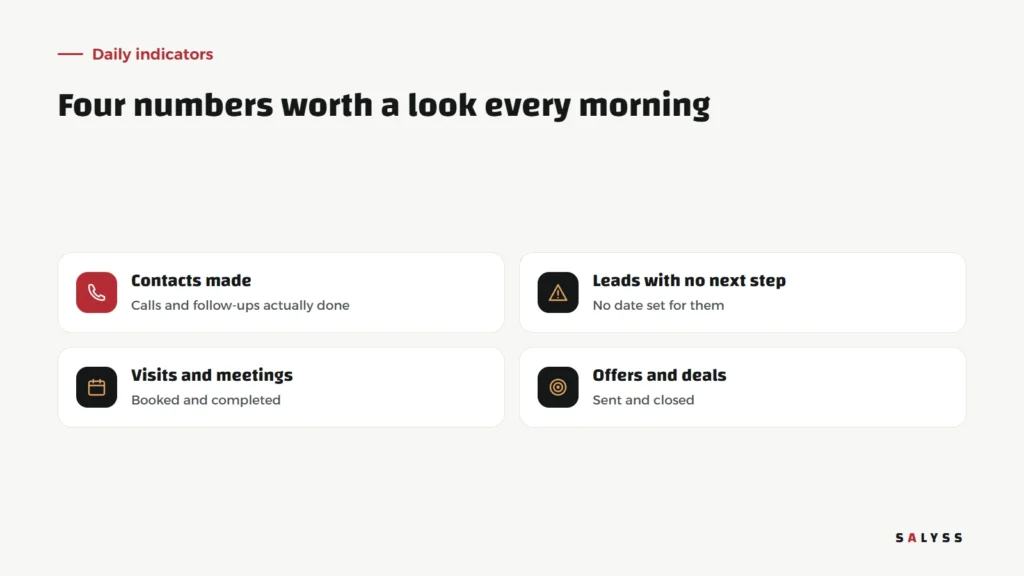
Contacts made
Calls and follow-ups actually completed, not planned. A sudden drop for one rep may signal pressure or a problem worth a quiet conversation.
Leads with no next step
The most dangerous number in sales. A customer we spoke to, with no follow-up date set. That customer is on the way to being forgotten, perhaps to a competitor. The goal is to bring this number close to zero every day.
Visits and meetings
Booked and actually held. The gap between the two reveals cancelled appointments, and deserves the question: why?
Offers and deals
How many offers were sent, and how many closed. This is closer to the result, but still earlier than the month-end figure.
Measure every stage, not just the result
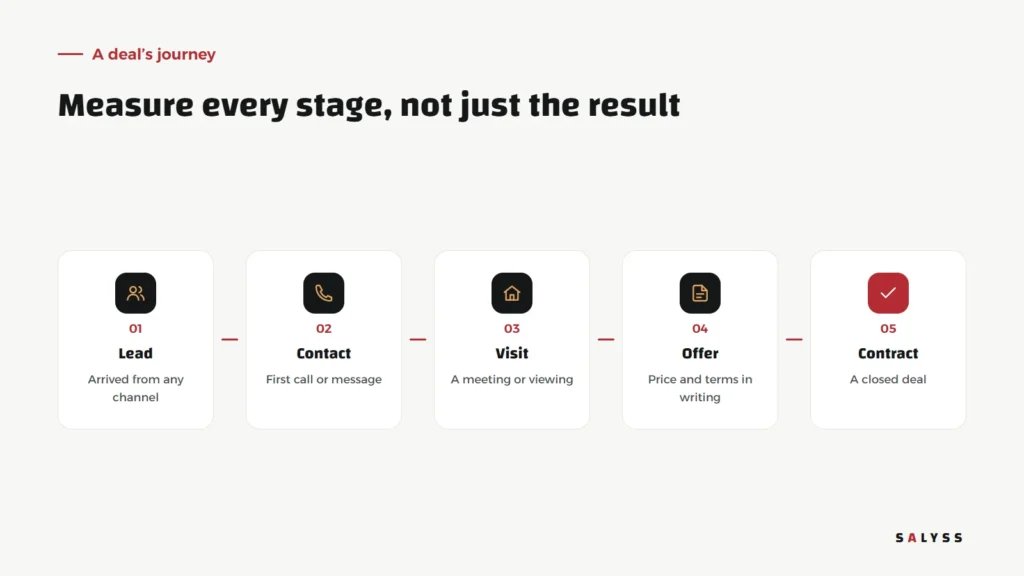
When you see the deal journey as stages, the questions get sharper. If lead volume is good but few reach a visit, the problem is usually the speed of first contact or the quality of the source. If visits are many and offers few, the team may need training in understanding customer needs. If offers are many and contracts few, the issue may be price or follow-up after the offer.
Common mistakes in tracking indicators
- A crowded dashboard: twenty numbers nobody reads. Start with four.
- Manually entered numbers: if reps type their figures into a sheet at day’s end, the numbers will be estimates. They must come from the recorded work itself.
- Comparing reps in different situations: a rep handling new leads cannot be compared with one following up existing customers.
- Using indicators only to punish: a team that fears the numbers learns to dress them up.
Where do the numbers come from?
Accurate indicators come from a system where the team records daily work: the call from the customer file, the appointment in the agenda, the offer in the deal record. In SALYSS Business Park these numbers are calculated from the team’s own work, so nobody prepares a separate report, and the manager can see the picture at any time.
A ten-minute morning meeting
Try a short meeting every morning this week around the four numbers. No blame and no speeches, just two questions: who needs help today? Which customers have no next step? This simple meeting changes how a team works more than any long monthly report.
Read more about lead follow-up in the SALYSS Business Guide, or book a free consultation to define the right indicators for your team.
Frequently asked questions
Is the monthly sales figure enough to judge the team?
No. It is a late result. Daily indicators such as contacts made and leads with no next step reveal problems before they show in the monthly number.
How many indicators should a manager track?
A small number you can act on. Four clear daily indicators beat a crowded dashboard nobody reads.
Where do the numbers come from?
From daily work recorded in the system: calls, appointments and offers. If indicators need separate manual entry, they will not be accurate.